
Review management: the four jobs and who does them
The definition is settled. What nobody agrees on is where review management stops, who inside a business does it, and how much of it needs software.
Lachlan Fea 10 min read
In this article10 sections

Review management is the ongoing work of asking customers for reviews, watching for new ones across the sites where people look your business up, replying to what arrives, and acting on what the reviews say. A business can do all of that without buying anything. It cannot avoid the work just because it has not named it.
Verified 6 September 2026 against Google's help pages on local ranking, managing customer reviews and editing a Business Profile, the Maps content policy, Google's generative AI guidance for Search, Yelp's content guidelines and the FTC's Consumer Reviews and Testimonials Rule. None of it is legal advice.
You will find that definition in most guides. The less settled part is where the job stops, who owns it inside a business, and when it is enough of a job to pay for software.
What is review management? The four jobs
| Job | What it involves | What it changes |
|---|---|---|
| Ask | A text or email to every customer once the job is done, carrying a direct link to the profile | How many reviews you get |
| Monitor | Knowing a review landed, on any profile, per location, without going looking | How quickly you can act on one |
| Respond | A public reply written for the next reader rather than for the reviewer | What a browsing customer makes of you |
| Use | Reading the set in a batch and counting what recurs | What the business does differently |
Skip asking and you only manage whatever turns up. Skip reading and you collect evidence nobody uses.
Asking
Most businesses with a review problem have an asking problem. The people who leave an unprompted review felt strongly enough to make time for it, which tilts the pile towards unhappy customers. A steady ask to every customer changes that mix. It is the only job here that changes how many reviews you receive.
The mechanics fit in a few sentences, but they are easy to get wrong in a rush. Ask while the job is still fresh, ask once, then leave that customer alone next month. The method is in how to get more Google reviews.
You cannot ask everywhere. Yelp's content guidelines say, under conflicts of interest, that "Businesses should never ask customers to write reviews." Google's Maps content policy takes the opposite position, allowing merchants to "solicit or encourage the posting of content that does represent a genuine experience, without offering incentives". Check which side a site sits on before you build a campaign around it.
Monitoring
Review monitoring means knowing a review arrived, on any site, without going looking for it. That sounds like admin until you write down the profiles. One clinic might have Google, Facebook, a health directory and a booking platform. A restaurant group with four sites has all of those four times, then the delivery apps on top.
What it involves:
- Knowing every profile that exists, including profiles nobody at the business created. Duplicate and auto-generated profiles can collect reviews you never see.
- Being told when a review lands instead of checking manually. Some sites notify the owner if you turn it on. Plenty do not, and almost none do it per location.
- Catching edits as well as arrivals. Google's help page notes a customer "can still change their review after reading your reply", and a three-star quietly edited down to one notifies nobody.
- Spotting reviews that break the site's own rules, so you can report them while the detail is fresh.
- Doing this per location, so the site that has gone quiet is visible instead of averaged away.
Review monitoring, platform by platform covers the notification settings on Google, Facebook, Yelp and Tripadvisor, and what each leaves you to catch by hand.
The manual version is familiar: thirty tabs open on Monday, a few saved passwords, then someone gets pulled into something else. Keep the list to the two or three profiles your customers actually use, or have software collect them in one place.
Responding
A reply is public. Write it for the next reader, not as a private conversation with the reviewer. On Google, replies post under the review and, per Google's help page, "The person who wrote the review is notified when you reply." Google checks replies against its content policies first, usually inside 10 minutes, though it warns this can take up to 30 days.
Reply to the good ones too. A wall of five-star reviews without replies can look like an absent owner, and the reply is the part of that page you control. One reply that names the thing the customer mentioned beats five versions of a generic thank-you. There are worked examples in our review response examples.
Using what the reviews say
This is the job that gets skipped, even though it pays for the other three. Fifty reviews a month is a free survey with a better response rate than any survey you could run. Read them in a batch and the pattern is sitting there: eleven mentions of parking this quarter, six about the wait on Saturdays, nine naming the same technician. Two of those are operational fixes. One is a staff member who should hear about it. Reading reviews in a batch shows how to tag and compare those patterns by location. None of it is visible if reviews are only read as they arrive.
Review management vs reputation management vs listings management
These terms get used as synonyms, but they describe different work. That matters when you are buying software, because vendors often price them separately.
| What it covers | What it does not cover | Where it happens | |
|---|---|---|---|
| Review management | Asking for reviews, monitoring new ones, replying, reading them for patterns | Anything that is not a review: press, social posts, search results you do not own | Google, Facebook and the review sites your industry uses |
| Reputation management | Everything a search for your business name turns up, including reviews, news, social accounts, forums and complaint sites | Very little, which is why the term is vague and easy to sell | The whole first page of search results |
| Listings management | The facts on your profiles: name, address, phone, hours, categories, photos | Reviews themselves, though it changes how many people find the profile to review it | Google Business Profile, Apple Maps, Facebook, directories |
Review management is the smallest of the three and has a daily rhythm because reviews arrive whether or not somebody watches. Reputation management is a project you run when something has gone wrong. Listings management is maintenance: fix your hours once, then check them each quarter.
Where reviews actually get read
Reviews matter in proportion to the people who see them, and readership is concentrated. BrightLocal's Local Consumer Review Survey 2026 (published February 2026, 1,002 US consumers) found 97% of consumers read reviews for local businesses, and 71% used Google to do it, down from 83% the year before.
The 12-point fall is the part worth noticing. Google is still where most people look, but a growing share of the reading happens on Facebook, industry sites, booking and delivery apps, and increasingly an AI assistant. The working list is Google first, then the one or two sites your industry genuinely uses: Facebook for a salon, TripAdvisor for a restaurant, a booking platform for a clinic. More dated, sourced figures are in our online review statistics roundup.
What reviews do to your ranking on Google
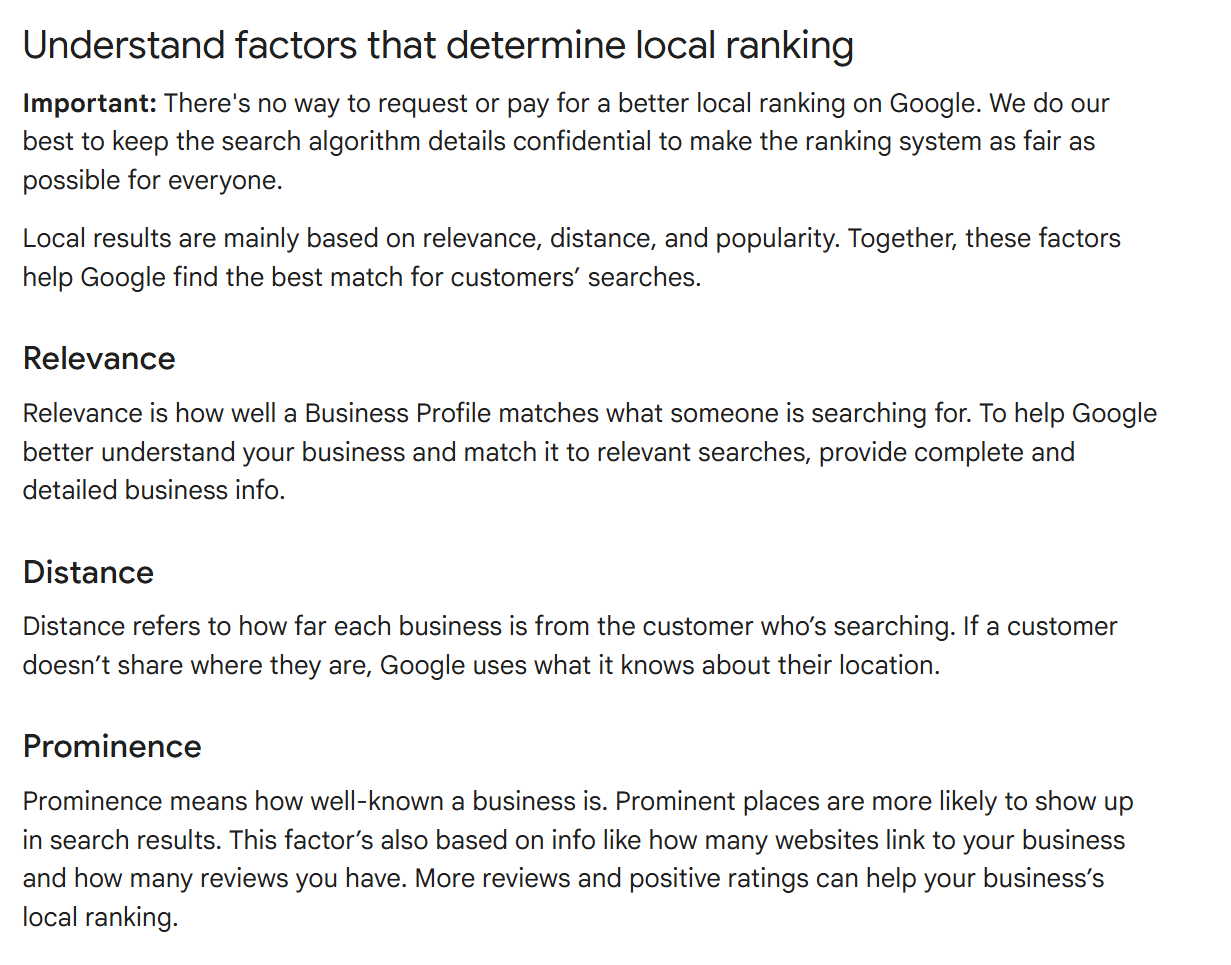
Google is unusually direct. Its local ranking help page names relevance, distance and prominence, and says under prominence that "More reviews and positive ratings can help your business's local ranking."
That is the full extent of what Google has confirmed. It does not say how much reviews matter, whether recency counts, or whether it reads the words in a review. The same page says: "There's no way to request or pay for a better local ranking on Google. We do our best to keep the search algorithm details confidential." Everything beyond that is inference from correlation studies. Those studies cannot separate reviews from the fact that busier businesses collect more of them.
Google has put reviews in the local-ranking picture. It has not said how heavily. Customers reading them is still the reason to ask; the ranking effect comes after that.
What reviews do to AI answers
Google's guidance on generative AI in Search says its "generative AI responses can include product listings, product information, and information about local businesses", and names Google Business Profile as one of the things that helps a business appear in them. Your profile, and the reviews on it, are part of what an assistant has to work with when somebody asks it for a physio in their suburb.
Demand for that kind of answer moved fast. BrightLocal's Local Consumer Review Survey 2026 (published March 2026, 1,002 US consumers, 455 of them AI users) found 45% had used an AI tool to find a local business recommendation in the past year, against 6% the year before. One annual survey moving that far is a direction, not a decimal.
Nothing about the day-to-day work has suddenly become exotic. You still ask, monitor, reply and read the set. There is now another place to check whether that work is showing up. Nobody has published a weighting for reviews inside an AI answer, so asking the assistant is the only way to see where you stand. Cloutly reports that monthly for each location across ChatGPT, Gemini and Perplexity on our AI search visibility page, as a sample rather than a rank. Ask the same question twice and the answer can differ, which is how these systems work.
What review management is not
It is not filtering out unhappy customers
Asking for a star rating first and showing review links only to people who answer four or five is review gating. Google's Maps content policy prohibits it: merchants may not "discourage or prohibit negative reviews, or selectively solicit positive reviews from customers". The FTC is narrower, saying its rule has no specific ban on asking only customers you think are happy, but that the practice "could violate the FTC Act". A filtered rating describes the filter rather than the business.
It is not buying reviews
The FTC's Rule on the Use of Consumer Reviews and Testimonials has been in force since 21 October 2024 and "authorizes courts to impose civil penalties for knowing violations". It covers fake and false reviews, incentives conditioned on a review expressing a particular sentiment, undisclosed reviews from company insiders, and unfounded legal threats used to get a negative review taken down. Paying for five-star reviews and asking reviewers to disclose payment does not fix it: FTC staff say that still breaches the rule. Google also forbids offering "payment, discounts, free goods and/or services" in exchange for posting a review.
It is not reputation repair
You cannot delete a review simply because you dislike it. You can report one that breaks a site's rules, and the report succeeds or fails on whether it actually breaks them. That is a narrower test than most owners expect: see how to remove negative reviews from Google. Much of what is sold as reputation repair is that report, submitted by someone else at a markup.
How to manage online reviews by hand
If you have one location and fewer than about ten reviews a month, a routine can cover it.
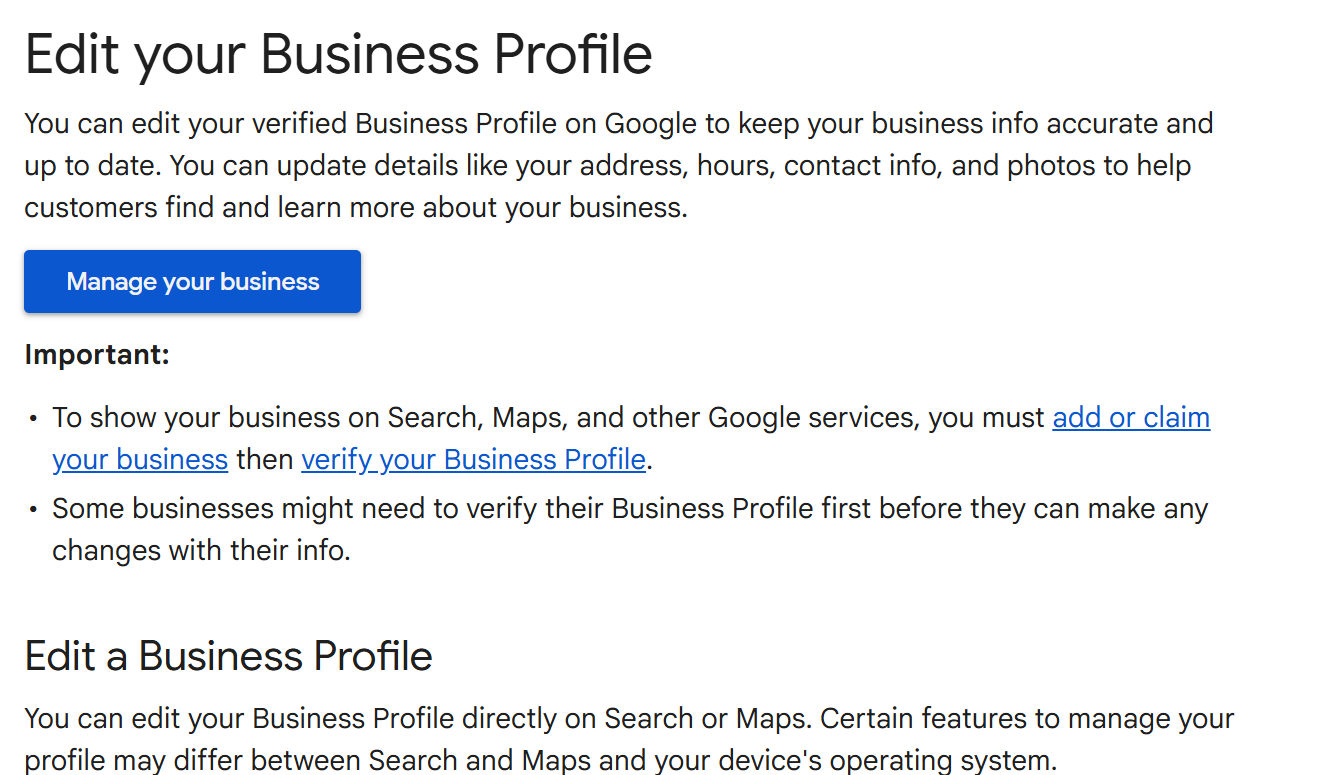
- Claim every profile. Google Business Profile comes first: Google makes you add or claim the business and verify it before changes show on Search and Maps, and you do it in Search or Maps. Then Facebook, then the industry site your customers use.
- Turn on notifications where the site offers them, and put sites that do not notify into a Friday reminder.
- Set up one ask: a template with your Google review link, sent by whoever finishes the job.
- Reply to everything twice a week. Fifteen minutes on Tuesday and Friday clears a normal week.
- Read the whole set once a month and write down the three things people keep mentioning.
- Check next month whether they still are.
The routine works. Businesses usually drop it because steps 2 and 4 rely on somebody remembering during a busy week.
Who does review management, and how long it takes
In a one-site business, the owner or front-desk lead normally owns it. Keep it with one person. Reviews in an inbox that two people half-watch can sit unanswered for a fortnight. Allow two hours a month, most of it spent on replies.
In a network of ten sites or more, the job splits. The marketing lead owns asking, templates and reporting. Each site manager owns replies to their own reviews because they know whether the appointment really did run forty minutes late. Replies written only by head office sound as if nobody present wrote them.
Responding scales badly; asking does not. Forty locations at twenty reviews a month is 800 replies. At three minutes each, that is 40 hours, or a person. Asking costs about the same at one site as at forty because it is a template and a trigger. That is why networks buy software before single sites do. The operating detail is in our multi-location review playbook.
Review management software: when you need it, and when you do not
Software starts to earn its price when one of these is true: more than one location, more than two profiles collecting reviews, more than about fifty customers a month to ask, or replies consistently going out days late. That is when the job turns into a counting-and-remembering problem. Below it, you may be paying for a habit you could simply have.
It should do the boring parts reliably. Send the ask at the right moment and not twice, put every location's reviews in one list, keep a record of who replied and when, and count what the reviews say. Cloutly puts every location's reviews and messages in one inbox and keeps the asking sane: a repeat customer is one contact asked once, and anyone who reviewed you in the last 90 days is skipped.
Be sceptical while you shop. A tool that offers review links only to happy customers is selling a practice Google prohibits. A tool that promises a multiple of the reviews you will get, without saying what it compared you against, is marketing rather than measurement. Even our NiceJob comparison deserves the same scrutiny.
Frequently asked questions
What is review management?
Review management is asking customers for reviews, monitoring sites where reviews about your business appear, replying to what arrives, and using what the reviews say to change how the business runs. It applies to any business customers can review, with or without software.
What is the difference between review management and reputation management?
Review management concerns reviews on review sites. Reputation management covers everything returned by a search for your business name, including news, social accounts, forums and complaint sites. Review management runs continuously; reputation management is usually a project in response to a problem.
Is review management worth it?
For a business customers can look up before buying, yes, because reviews exist whether or not you manage them. Paid software is a separate volume question: below roughly ten reviews a month at one location, a routine is enough.
Is review management legit?
The practice is legitimate, as are most vendors. What is not legitimate is fabricating or filtering reviews: buying them, writing them, or showing a review link only to customers who rate you highly first. A provider offering any of those is a reason to walk away.
How do you monitor reviews across multiple sites?
Cut the list to the two or three profiles your customers use, turn notifications on, and put sites that do not notify into a calendar reminder. Beyond two locations, that stops working. Most businesses then use software to collect every profile in one list.
How often should you respond to reviews?
Twice a week suits most service businesses, and batching replies is faster than answering them as they land. Reply to positive reviews as well as negative ones. The reply is for the next person reading the profile, and an unanswered wall of praise can look like an absent owner.