
1-star review response examples: 10 Google replies (2026)
A one-star review is written to you. The reply is written for the next person who reads it.
Lachlan Fea 10 min read
In this article9 sections

Reply inside a day, keep it under sixty words, and write it for the next person who reads the profile rather than the one who left the star. The 1-star review response examples below are grouped by the situation the review arrived in, starting with the most common one, where somebody leaves a single star and no words at all.
Every business and customer here is invented. Copy a reply, swap in the one line only your business could have written, and send it.
What to do in the first hour
Three things before you type.
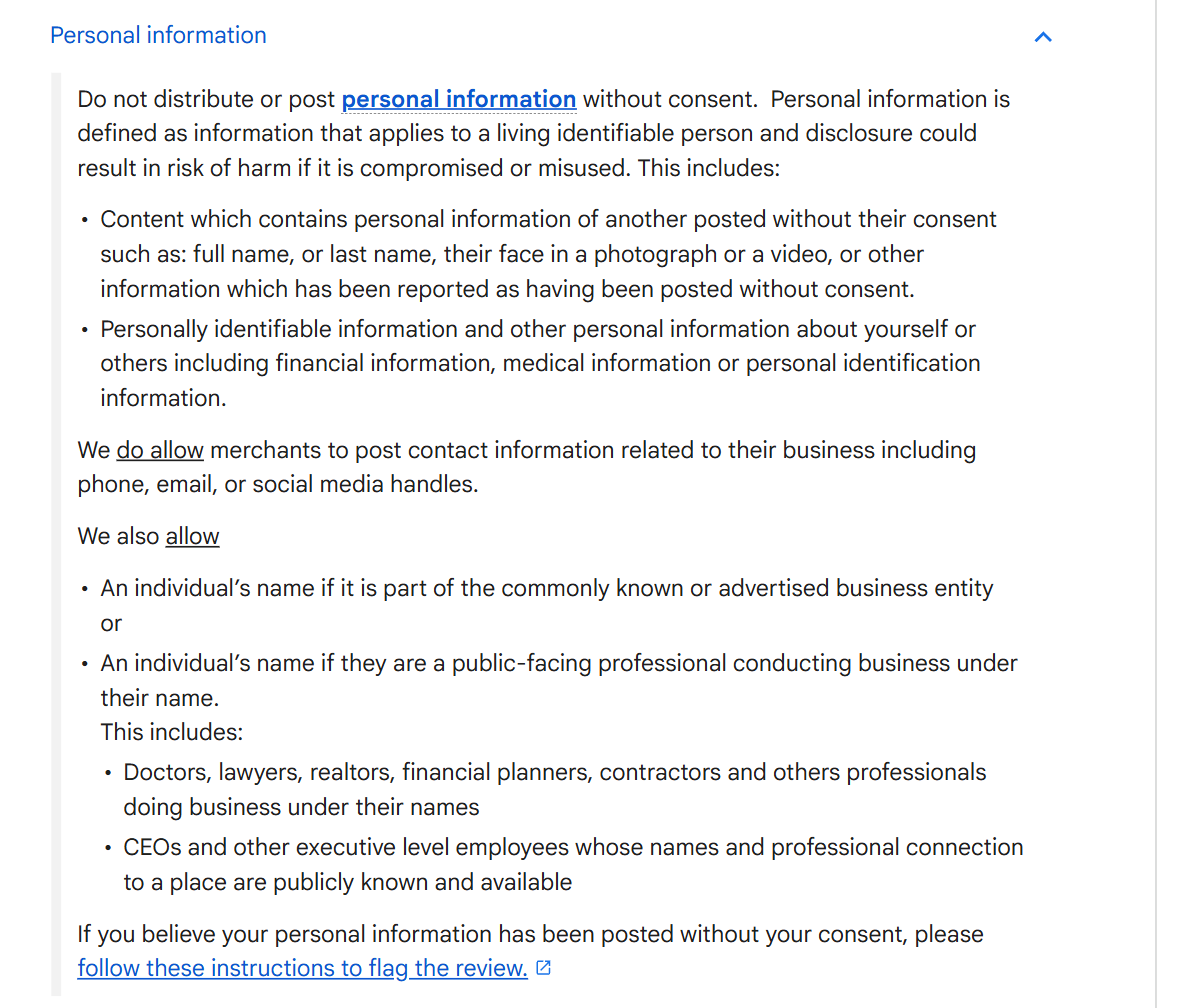
Do not reply angry. You can edit or delete a Google reply afterwards, from Read reviews, but the reviewer is notified the moment you post it and anyone can screenshot it before you think better of it. If the draft has the word "actually" in it, put it down.
Work out whether they are a customer. Search bookings, invoices and the phone log for the name and the date. A visit you can see, a visit under a different name, and no record at all are three different replies, and you cannot write any of them until you know which one you are holding.
Check whether it breaks a policy. Google's Maps user contributed content policy bans content "which contains personal information of another posted without their consent such as: full name, or last name", content "using profanity or obscenity to offend other users or emphasize criticism", and reviews written under a conflict of interest, which "may include current or former employment". A review naming your receptionist in full is reportable. A review calling your prices a rip-off is not.
Then reply, whichever it turns out to be. Reporting is slow and it often fails. The reply is what the next customer reads.
Why you should always reply to a 1-star review
The reply is not for the person who wrote it. It is for the hundred people who open your profile this month and stop at the worst thing on it.
In BrightLocal's Local Consumer Review Survey 2026 (published 11 February 2026, 1,002 US consumers), 89% said they expect owners to respond, and 68% said they will only use a business rated four stars or higher, up from 55% the year before. The cost of a one-star is not really the rating. It is the number of people who stop reading there.
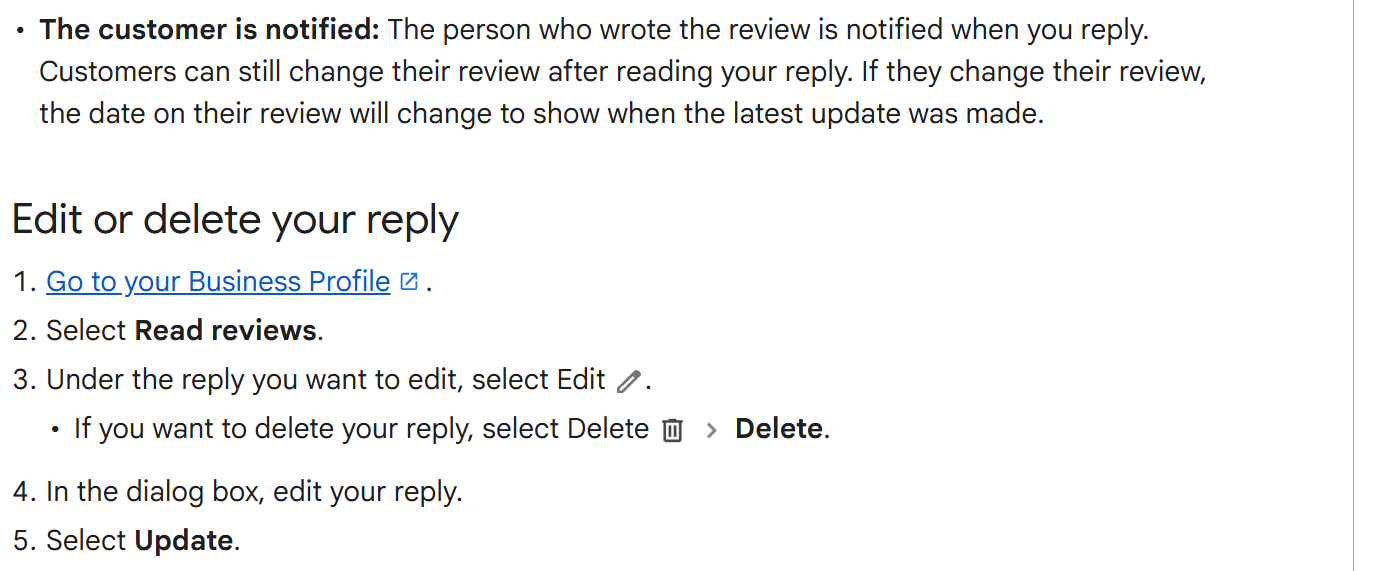
The second reason is mechanical. Google tells the reviewer you replied, and reviewers can go back and change what they wrote. One star becoming four is a three-star swing on a single review, and it only ever happens because somebody answered.
The four-part reply that works
Every reply below makes the same four moves, one sentence each.
- Acknowledge the specific thing. Not "your experience". The wait, the invoice, the callback nobody made.
- Own your half, plainly, and without a paragraph of context around it. If none of it is yours, say what you can see instead.
- Say what happens now, with something concrete in it: a change, a refund, a person, a date.
- Move it offline. A number or an email, and a name at the end. Google posts your reply under the business name and hides your personal one, so a name only appears if you type one.
The reply is only part of it. Fix the thing, and be able to say what changed: "we have spoken to the team" is nothing, "the gap between afternoon appointments is fifteen minutes instead of five" is a sentence you can still point at next year. Once it is genuinely sorted you can ask them to update the review, because asking is allowed. Paying for it is not, and neither is leaning on them: Google bans incentives "in exchange for posting any review or revision or removal of a negative review", and the US FTC rule on fake reviews (14 August 2024) covers threats, intimidation and "certain false public accusations" used to remove one, with civil penalties for knowing violators.
1-star review response examples, one per situation
Seven here. Three more are in the no-comment section below, which is where most one-stars land.
A service failure that is yours.
Karl, you booked a same-day repair, nobody turned up, and nobody rang to tell you. The call-out fee went back on your card this morning. I can get the job done Thursday if you still want it done. My mobile is on the profile. Dan, Ridgeway Plumbing
Refund first. Explanation never. What the next reader wants to know is what happens when a job goes wrong, not why this one did.
A price complaint.
Thank you for saying it here rather than not at all, Hugh. The fee for a statement of advice is fixed and it is set out in the engagement letter, so if the number came as a surprise on the invoice, that is a failure in how we explain ourselves. What I can do is take you through the file and show you where the hours went. Ask for me on the office number. Elise, Meridian Financial
Before you write, decide whether the person was overcharged or simply never told the price. Only one of those is your mistake, and neither is a reason to defend the number twice.
A review that names one of your staff.
Danielle, thank you for putting this in writing. Nobody should be spoken to that way at our front desk, whatever sort of morning either of you was having. I know who was on and it has been dealt with, though not here. Ask for me when you book next and I will do your colour myself. Bianca, Loomis and Fern
Take it seriously in public and handle the person in private. Never deliver a verdict on an employee where the internet can read it.
If the review prints that employee's full name, report it as well. Google's policy lists a full or last name as personal information posted without consent, and it is the removal ground almost nobody uses. Read the exceptions first, though. The same clause allows a name that is part of the business name, and allows naming public-facing professionals trading under their own names, which Google spells out as "doctors, lawyers, realtors, financial planners, contractors and others professionals". A named receptionist is reportable. A named dentist whose name is on the door is not.
A review from a former employee.
This one describes working here rather than storing anything here. I am not going to have that conversation on a public profile. My email is on the listing if whoever wrote it wants to have it properly. Grant, Northbank Storage
Do not name them, do not confirm the employment, do not reopen the exit. Report it separately as a conflict of interest, which Google defines as including current or former employment.
Aggressive or abusive language.
There is a real complaint in here about the bill, and I would like to sort that out. I am not going to answer the rest of it on a public profile. The practice number is on the listing and I am here until five. Claire, Harbour Lane Dental
Answer the one legitimate thing and ignore the rest. Never quote or describe the abuse, because that publishes it again for everyone who had not read that far. Then report it, if it is profanity aimed at a person or a threat.
A one-star with no record of a visit.
I have been back through eight weeks of appointments and there is no booking, invoice or file under this name, and we do not offer the treatment described. I would rather be wrong about that than leave it standing, so if you did see somebody here, call and ask for me and I will find you. Sam, Coastline Physio
State the gap in your records as a fact. Never call anybody a liar in public. The sentence that keeps you out of trouble is the one offering to be wrong, and it costs you nothing if you are right.
A one-star that belongs to somebody else.
Craig, the order was two hours late. You paid us and not the courier, so I am not going to point at anyone else. The delivery fee is back on your card and we have stopped using that service north of the river. Call the shop and we will remake the order whenever suits you. Hana, The Copper Pot
Couriers, subcontractors, the car park you do not own. If they bought it from you, it is yours in public. Sort the third party out where nobody can see it.
How to respond to a 1-star review with no comment
A star with no words is the most common one-star a busy business gets, and the hardest to answer, because there is nothing to answer. It might be a bad visit nobody could be bothered writing up, a rating tapped by accident in Maps, or one meant for the business next door.
One thing before you write. Google's policies enumerate content that is not allowed, and a bare star contains no content at all, so my reading is that a wordless one-star breaches none of them. Google does not say that outright, but it matches what happens when you report one: almost nothing comes down. The reply is all you have, and it has to invite the detail without demanding it.
Somebody you can find in your records.
Thanks for the rating, Suzanne. One star after a first appointment tells me something went wrong and I would rather hear what. My email is on the profile and I read it myself. Sam, Coastline Physio
A name you cannot find at all.
Thanks for the rating. I cannot match it to a booking or an invoice, so it is either under another name or it has landed on the wrong business. Either way I would like to know which. The office number is on the profile. Dan, Ridgeway Plumbing
A long-standing customer.
Thanks Paul. Six years in unit 14 and this is the first one star, so something about Thursday was different and I would like to know what. My mobile is on the profile rather than the office line. Grant, Northbank Storage
Ask once. Never ask them to change or remove the rating, and never post the same two sentences under two wordless one-stars, because they will end up stacked on the same screen.
What an unedited AI reply gets wrong
Here is a one-star: "Booked for 9am, seen at 9:50, no apology, then charged the full fee. Won't be back."
The reply that makes it worse:
We're sorry you feel this way. Our records show you arrived at 9:15, not 9:00, and our clinicians run to a strict schedule. The fee reflects the time booked, not the time used. We wish you all the best elsewhere.
Every sentence in it is defensible and the whole thing is a disaster. It corrects a customer in public, argues about minutes, and shows the next reader exactly what happens to people who complain.
Now a generated draft, posted without editing:
Dear valued customer, we sincerely apologise for the unacceptable experience you had at our clinic. Outstanding care for every patient is our highest priority and we clearly fell short on this occasion. Please accept a full refund and rest assured that immediate steps have been taken so this never happens again. Your feedback is invaluable to us.
Nothing in it is false and it is still unusable. It apologises for a version of events nobody has established, promises a refund the person typing may not be able to authorise, and says steps have been taken without naming one. Change the word "clinic" and it fits a panel beater.
Several of the pages ranking for this search are published by companies whose product will post the reply for you, one of them automatically on paid plans. Be careful with that approach, because four things in a reply have to come from a person.
- Whether the reviewer is a customer. Only your booking system knows that.
- The one fact only you have. The clinician's name, the buffer you changed, the fee you credited.
- The remedy you can authorise. A refund promised in public and refused in private is worse than saying nothing.
- The name and the number at the bottom. A reply signed by a business is a policy. A reply signed by Sam is a person.
That is the split worth building into how you work. Cloutly writes the first version from the review, the location and the rating, and a person edits it and sends it, with no automatic path from draft to posted (reputation management software).
What one 1-star review does to your average
Less than it feels like, and the difference is the denominator. Take a business sitting on 4.8 stars and add a single one-star.
| Reviews before | Average before | Average after | What the profile shows |
|---|---|---|---|
| 20 | 4.8 | 4.62 | 4.6 |
| 50 | 4.8 | 4.73 | 4.7 |
| 200 | 4.8 | 4.78 | 4.8 |
| 500 | 4.8 | 4.79 | 4.8 |
At twenty reviews, one bad Thursday costs you nearly two tenths, and a second one takes you to 4.45, under the 4.5 line that 31% of consumers now use as a filter (BrightLocal, 2026). At two hundred reviews the same one-star does not move the displayed rating at all.
Recovery is just as blunt. The business on twenty reviews needs twelve new five-star reviews to get back to 4.8, and it does not need the one-star removed to do it. Removal is a lottery. Volume is arithmetic.
Ask all of them, not the ones you expect to be kind. Sorting customers by likely sentiment before you ask is review gating, and the same Google policy bans discouraging negative reviews or selectively soliciting positive ones.
What happens if the review is fake
Reply first, in public, then report. The two do different jobs and the reply is doing most of them.
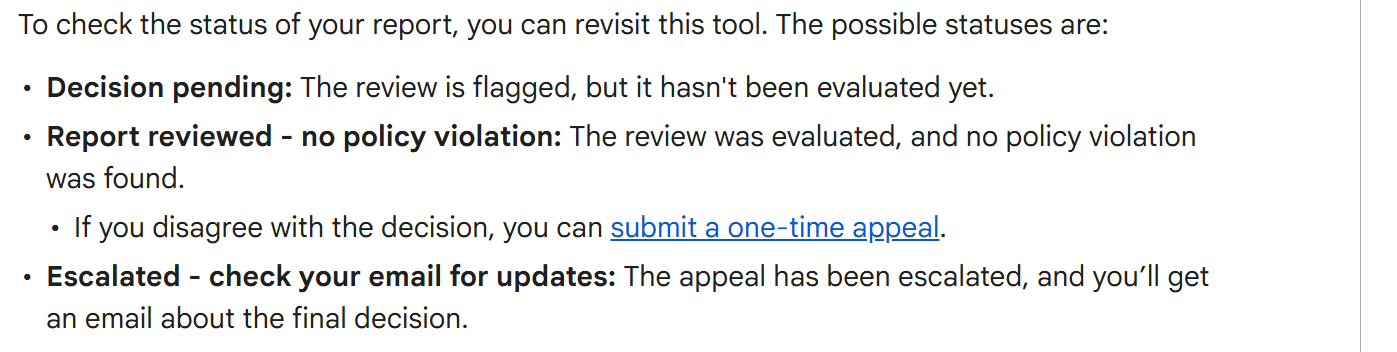
Reporting runs on evidence rather than indignation. What gets assessed is whether the content breaks a policy, not whether the review is unfair, so the report has to name the clause: no real experience, a conflict of interest, personal information, profanity aimed at a person, a threat. Report from the review itself or through Google's Reviews Management Tool. Evaluation takes several days, and if it comes back as no policy violation you get one appeal. After that the review stays.
Where the line falls, situation by situation:
| Situation | Reply | Report |
|---|---|---|
| A real customer, a real complaint | Yes, inside 24 hours | No |
| One star, no comment | Yes, two sentences | Almost never succeeds |
| Names an employee in full | Yes, without naming them back | Yes, personal information |
| Profanity aimed at a person, or a threat | Yes, one line, then offline | Yes |
| Written by a former employee | Yes, briefly | Yes, conflict of interest |
| No record of any visit | Yes, state the missing record | Yes, and expect it to be slow |
| Report rejected, appeal rejected | Already done | Stop, and go and get reviews |
The last row is the one people struggle with. Once you have replied, reported and appealed, there is nothing further you can do to that review. Every hour after that belongs to the next fifty.
Telling a fake from a bad day is worked through in how to spot fake reviews, and what actually gets one taken down is in how to remove negative reviews from Google. Reply patterns for the rest of the profile are in the review response examples hub, and the reviews themselves are read closely in bad review examples.
Frequently asked questions
How do you respond to a 1-star review with no comment? Two sentences. Thank them for the rating, say plainly that one star tells you something went wrong and you would rather know what, and give one direct way to reach you. Do not ask them to change or remove it.
Should a business owner respond to a 1-star Google review? Yes, inside 24 hours. 89% of consumers expect owners to respond and 81% expect it within a week (BrightLocal, Local Consumer Review Survey 2026). Google also notifies the reviewer when you reply, and reviewers can revise what they wrote.
Can you get a 1-star review removed from Google? Only if it breaks a content policy: no real experience, a conflict of interest such as a former employee, personal information, profanity aimed at a person, a threat, or off-topic ranting. Assessment takes several days and a rejected report gets one appeal. Disagreeing with the review is not a ground.
How long should a reply to a 1-star review be? Forty to sixty words. Anything longer starts to read as defensive and gives the complaint more room than it had on its own.
What do you say to a 1-star review you think is fake? Say what your records do not show rather than accusing anyone of lying, mention that you have reported it, and let the volume of genuine reviews underneath do the rest. Then file the report with the policy clause it breaches.