
NAP consistency in 2026: a straight answer and a working audit
Consistency is hygiene, not a ranking lever. It still costs you calls every time you get it wrong.
Lachlan Fea 9 min read
In this article9 sections

NAP consistency means your business name, address and phone number read the same everywhere they are published: your Google Business Profile, your own website, your Facebook Page, Apple Maps, Bing and whatever directories hold a record of you. It is worth doing and worth doing early. It is not the ranking lever a decade of local SEO writing made it out to be, and knowing which of those two things you are buying decides how much of your week it deserves.
What is NAP consistency?
NAP stands for name, address and phone number. Add the website and you get NAP+W, which is the version most people mean now. A citation is any place online that publishes some or all of that set, whether or not it links to you.
NAP consistency is those values matching across all of them. Values, not characters. "Suite 4, 12 Marine Parade" and "12 Marine Parade, Ste 4" are the same address. "(07) 3040 1188" and "07 3040 1188" are the same phone number. What Google's own guidelines ask for is that you "Represent your business as it's consistently represented and recognized in the real world across signage, stationery, and other branding" and "Make sure your address and/or service area is accurate and precise" (Guidelines for representing your business on Google). That is a rule about the facts, not about punctuation. Chasing commas is not the job. Finding the records that are genuinely wrong is.
What NAP consistency does for local rankings in 2026
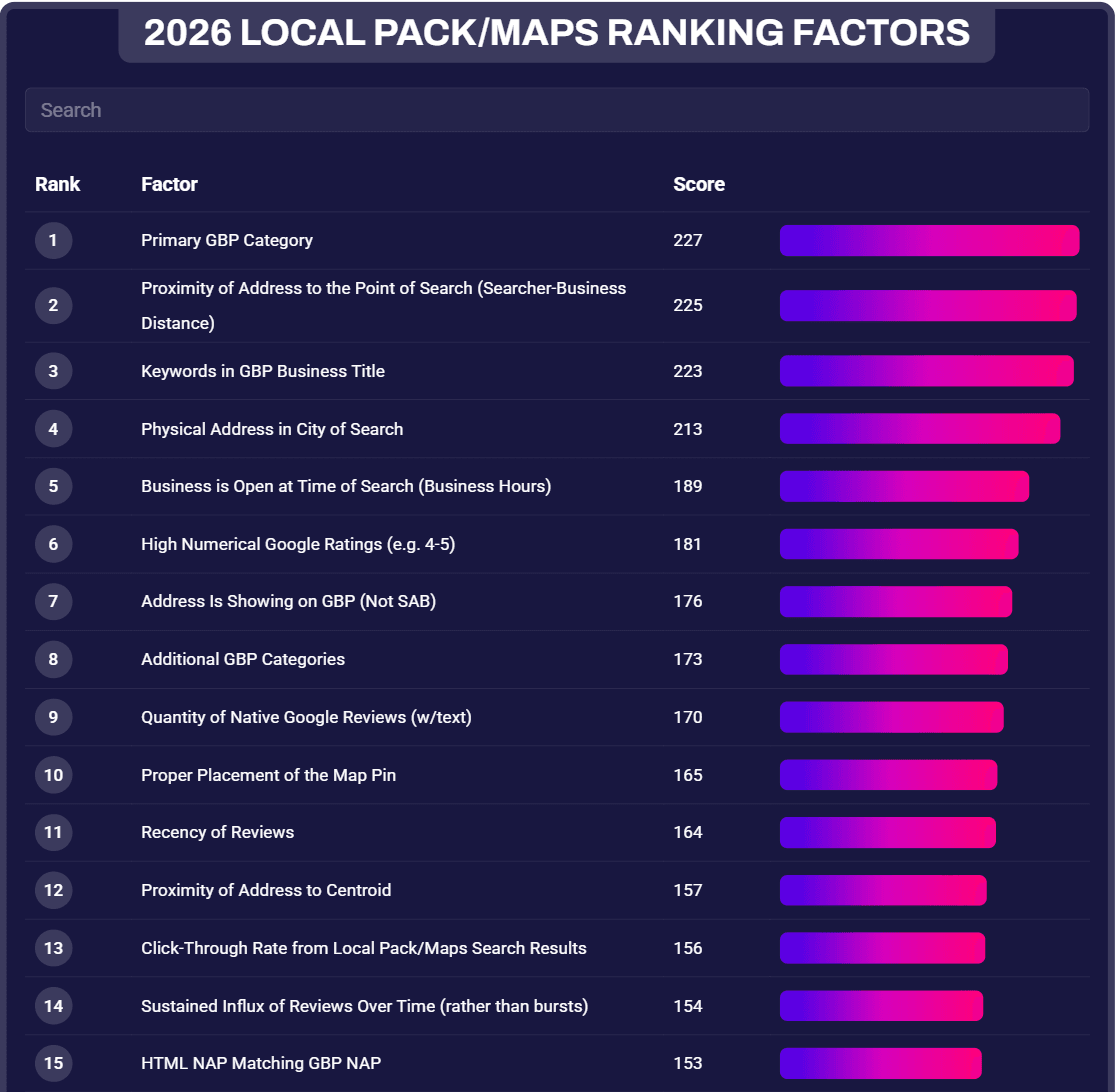
Whitespark publishes the Local Search Ranking Factors study, and the 2026 edition came out on 6 November 2025. Forty-seven local search practitioners are invited to score 187 factors in a two-hour survey, across four axes: local pack and Maps, local organic, conversion, and AI search visibility, which is new this year. Here is where the consistency factors landed, out of 187.
| Factor | Local pack and Maps | Local organic |
|---|---|---|
| Your website's NAP matching your Google profile's NAP | 15 | 55 |
| Consistency on Google, Bing and Apple Maps | 28 | 71 |
| Consistency on key sites (Yellow Pages, Yelp, D&B, CityGrid) | 63 | 79 |
| Consistency on the data aggregators | 85 | 90 |
| Consistency on other citation sources | 123 | 102 |
The site names in brackets are Whitespark's own factor labels, not a shopping list.
Read it as weighted opinion rather than a controlled test, because that is what it is. The shape is still clear. One consistency factor sits in the top twenty and the rest sit in the back half, below the primary category, the searcher's proximity, whether the address is in the city searched, whether you are open at the moment of the search, and your Google rating. The one that ranks is the one you own outright: your own website agreeing with your own Google profile.
Google has not published a ranking factor called NAP. Its account of local ranking is relevance, distance and prominence, and the guidelines are a rule against lying, not an instruction to standardise 200 directory records.
Consistency is hygiene. Being consistent will not push you up the map pack. Being inconsistent can hold you back, and it costs you customers either way. A wrong number is a lost call, and somebody who rings a disconnected line does not ring back and try the other listing.
It also decides who gets the last word on your profile. Google "gathers info from different sources, like user reports and licensed content", shows what it has changed in blue in the profile editor, and states plainly that "You can't manage all Google updates through your Business Profile" (Understand Google updates on your Business Profile). When an old directory keeps publishing your 2019 number, that directory is what keeps correcting you. Assistants behave the same way, a repair job covered in when AI gets your business details wrong.
What are NAP citations?
Citations come in two shapes, and they are no longer equally useful.
A structured citation is a directory record with fields: Yelp, Yellow Pages, an industry association's member list, an aggregator's database. An unstructured citation is a mention in prose, such as a local news story, a supplier's stockist page or a sponsor list on a sports club site.
The same study scores AI search visibility separately, and three of its top five are citation factors: presence on expert-curated best-of lists at number one, prominence on key industry-relevant domains at three, and the quality and authority of unstructured citations at four. Note which citations those are. Mentions on domains that matter in your industry, not another row in a directory nobody opens.
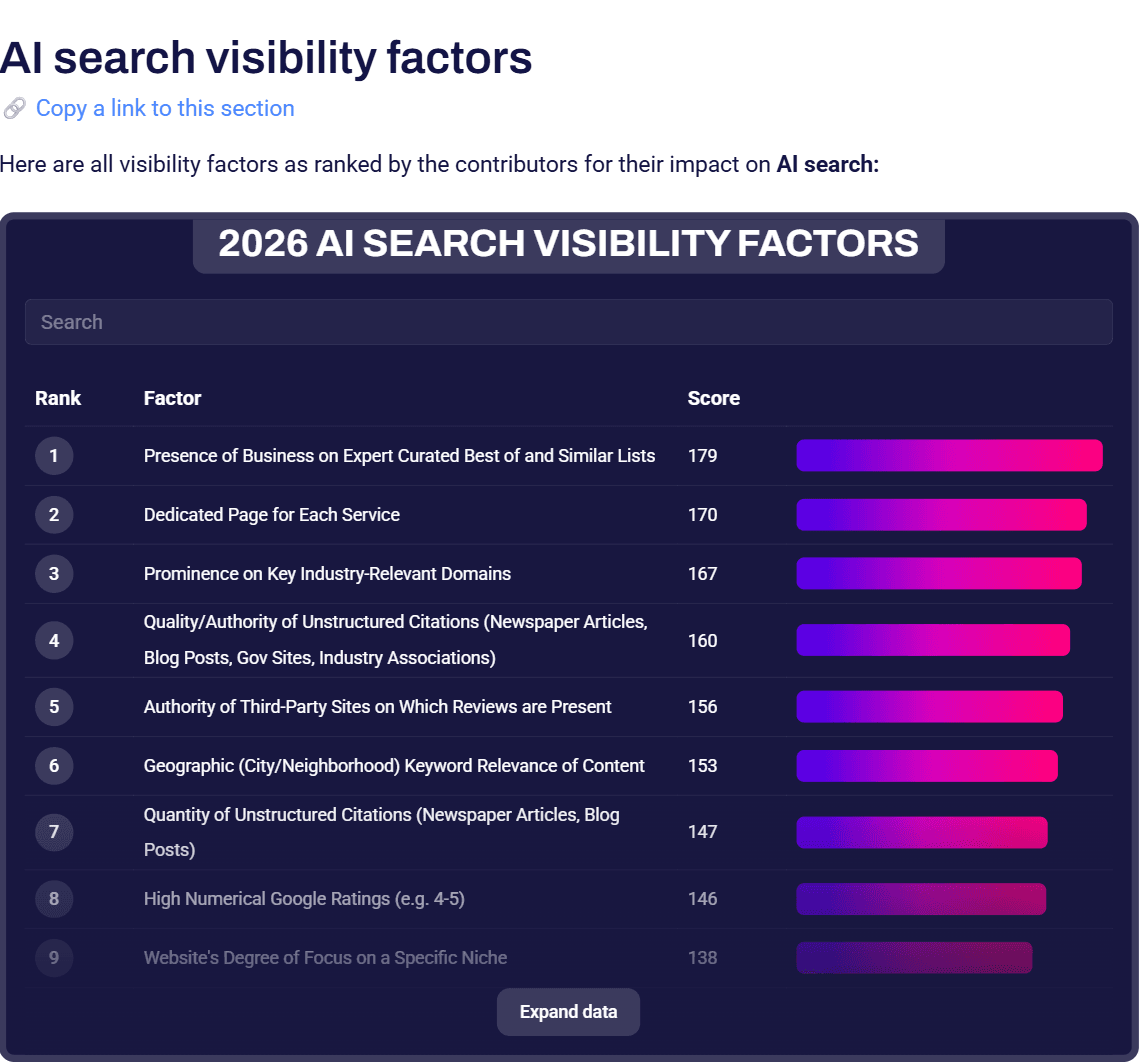
Whitespark's own reading of it: "Citations as a local search strategy have been decreasing in importance for the past decade, but AI SEO is breathing new life into them."
That matters because people now ask assistants for recommendations. BrightLocal's Local Consumer Review Survey on AI and trust, published on 10 March 2026 from 1,002 US adults, found 45% had used an AI assistant to get a local business recommendation, up from 6% the year before.
The old game was 300 directory submissions. The current one is correcting the records you already have.
Where NAP inconsistencies come from
Nobody sets out to publish two phone numbers. Inconsistency arrives as a side effect of something else.
A rebrand. The new name goes on the signage, the website and the Google profile. It does not go on the seventeen directory records an agency created in 2019, and nobody has the logins. Google also treats a name change differently depending on how big it is, so read how to edit your Google Business Profile before you type the new one in.
A move. The address changes on the profile in five minutes and stays in the website footer, the contact page, the booking confirmation email, the schema block and every directory. A move invalidates every published record at once, which makes it the largest single source of drift there is.
Suite and unit numbers. Google's instruction is conditional and specific: if you must give a mailbox or suite number, the physical address goes in "Address Line 1" and the mailbox or suite number in "Address Line 2". Most directories have one address field, so the suite number gets appended, prefixed or dropped. That is formatting rather than fact, and usually harmless. A virtual office is neither. Google says that if you rent a mailing address but do not operate out of it, "that location isn't eligible for a Business Profile", and a desk in a co-working space only qualifies with signage and staffed hours.
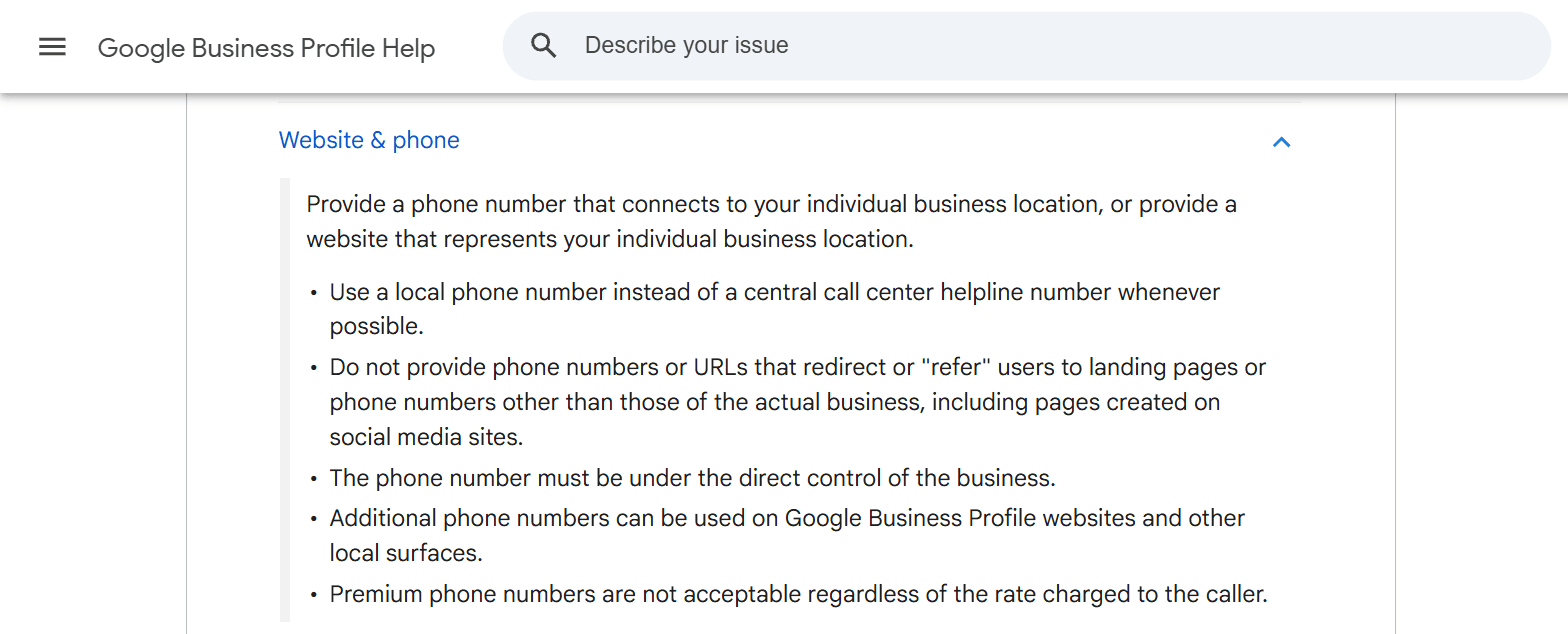
Tracking phone numbers. Dynamic number insertion usually rewrites the number in the visitor's browser after the page loads, leaving your served HTML alone. Confirm that with your vendor rather than assume it. Typing a tracking number into a directory listing is the version that definitely breaks things, and Google's guidelines rule it out: "Use a local phone number instead of a central call center helpline number whenever possible", and do not "provide phone numbers or URLs that redirect or 'refer' users to landing pages or phone numbers other than those of the actual business, including pages created on social media sites." The primary number has to ring at that location. Extras are allowed: "Additional phone numbers can be used on Google Business Profile websites and other local surfaces."
Franchise and multi-site websites. Tallowwood Dental has six practices and one website template whose footer carries head office's number, so five location pages publish a number that does not ring at that practice while all six Google profiles carry the right one. The website is the highest-weighted consistency factor in the table above, and a template is how it goes wrong at scale. Franchisees ordering their own signage and answering service produce the same result from the other direction.
How to audit NAP consistency in an afternoon
- Write the master record. One row per location: trading name exactly as it appears on the signage, address line 1, address line 2, suburb, state and postcode, the phone number that rings there, and the page on your site that represents it. This spreadsheet, not any profile, is what you correct back to. If you cannot fill it in without asking someone, that is the first finding.
- Search the way a machine sees you. In Google, search your phone number in quotation marks, then your old phone number in quotation marks, then your business name plus the suburb. The old-number search finds the problems, because it surfaces every record still publishing a value you retired.
- Open the eight places below and compare each field to the record. Do not fix anything yet. Fixing while auditing is how you lose track of what you have covered.
- Sort the findings into what you control and what you have to ask for. The second list takes weeks, so start it first.
Compare name, address, phone and website on every row, plus hours wherever the source carries them.
| Where to check | Who can change it |
|---|---|
| Google Business Profile | You, and Google |
| Your own website: footer, contact page, every location page, the schema block | You |
| Facebook Page | You |
| Apple Maps, through Apple Business at business.apple.com | You, and Apple |
| Bing, through bing.com/forbusiness | You |
| Yelp | You, once you have claimed it |
| Your industry's main directory and any association listing | Usually you |
| The data aggregators your country runs on | Slowest to change |
That last row is vague on purpose. The aggregators Whitespark names, Infogroup, Localeze and Foursquare, are the US set; the Australian, New Zealand and UK equivalents are different, and the old-number search in step 2 is the reliable way to find yours.
Anything beyond those eight is optional. A directory with no traffic and no authority in your industry is not worth an afternoon, and a paid tool reporting 47 "inconsistencies" is mostly reporting punctuation.
How to fix each source
Order matters, because directories and assistants read the first two.
Google Business Profile first. Change the field and save. Hours, phone and website usually reappear within the hour. Name, address and category can put you back through verification, so change them one at a time and only when the public record supports the new value. The sequence is in how to edit your Google Business Profile.
Your own website second. The footer is the easy part. The rest is the contact page, every location page, the LocalBusiness schema, the booking widget, any PDF you still link to and the email signature template. Search your own site for the old number instead of trusting your memory of it.
Facebook, Apple, Bing and Yelp third. Facebook is edited on the Page itself, in its own settings. Apple is where most guides are now wrong: Apple Business Connect became Apple Business in April 2026 and businessconnect.apple.com redirects to business.apple.com, so a 2024 walkthrough describes screens that are gone. Adding your business to Apple Maps has the current path. Bing's old bingplaces.com redirects to bing.com/forbusiness, and Yelp needs claiming before you can edit it.
A directory you cannot log into. Most have a "suggest an edit" control that needs no account. The rest have a support address. Keep a list of the ones that never respond, because that list is where a resurfacing wrong number comes from.
A location that has closed. Do not delete the profile. Deleting it takes the reviews and leaves the listing on Maps. Mark it closed, as set out in how to remove a business from Google.
What changes at ten locations
At one site this is an afternoon and then fifteen minutes a quarter. At ten it is a different job, because the failure is not one wrong record. It is one wrong record per site, each appearing at a different time.
The rule that holds at any size: decide the value once, hold it somewhere that is not a profile, and publish from there. Editing profiles by hand makes the profile the record, and a record you cannot read in one place is a record nobody checks. If two sites share a name, multiple Google locations with the same name covers keeping them distinct.
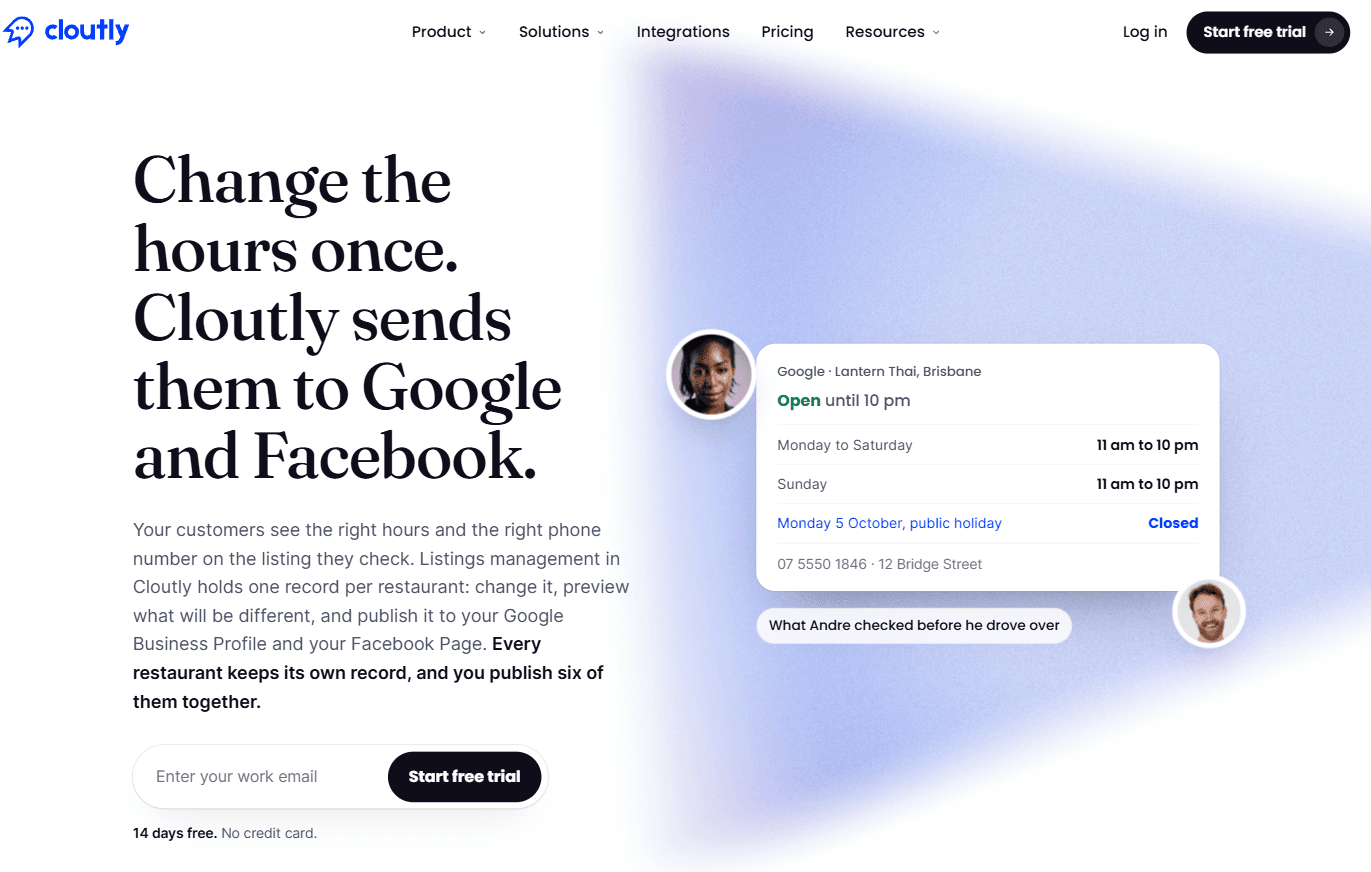
Cloutly's listings management is built on that shape: one record per location covering name, phone, website, description, address and hours, published to Google Business Profile and to the Facebook Page only after you approve a preview of the exact change, then checked weekly, read-only, against Google's public view, Yelp, Facebook and TripAdvisor. The wider picture for a network is on the multi-location page.
How often to check
Quarterly suits a single site and monthly suits a network, but a schedule is the weaker instinct. Check on events instead: a move, a rebrand, a new phone system or answering service, a website rebuild, a franchisee joining or leaving, a location closing. Those causes account for nearly all of it, and every one is a date you know about in advance.
For the layer above this one, landing in the Google map pack has the factors that do move you, and adding your business to Google Maps covers getting the profile right in the first place.
FAQ
What does NAP stand for in SEO?
Name, address and phone number. NAP+W adds the website. Both terms come from local SEO rather than from Google, whose own account of local ranking uses relevance, distance and prominence.
What is a NAP citation?
Any online mention of your business name, address or phone number. A structured citation is a directory record with fields. An unstructured citation is a mention in prose, like a news article or a sponsor page. Neither has to link to you to count.
How do I check my NAP consistency?
Write down the correct details for each location, then compare them against your Google Business Profile, your own website, Facebook, Apple Maps, Bing, Yelp, your main industry directory and the data aggregators. Searching your old phone number in quotation marks finds forgotten records faster than any tool.
Does NAP consistency still matter in 2026?
As hygiene, yes. In the 2026 Whitespark study one consistency factor ranks 15th of 187 for the local pack and the rest sit in the back half, so it is not what moves you up. It is what stops a customer ringing a dead number, stops Google correcting your profile from an old source, and stops an assistant repeating a detail you retired two years ago.