
How to monitor AI search visibility for your business
Check the same local-business prompts in ChatGPT, Gemini, Perplexity, Copilot and AI Mode, then keep a simple log of the names and sources that appear.
Lachlan Fea 9 min read
In this article9 sections
To monitor AI search visibility, run a fixed set of prompts through the same assistants on the same day each month, signed out, with your suburb written into the question, and record whether you were named, which rivals were named and what the answer cited. The measurement is the log, not any one answer. A screenshot of one good reply proves about as much as one good day of trading.
For the wider measurement, see how AI search decides which local businesses get named. The guide to does ChatGPT recommend businesses like yours covers where each assistant's local answers come from and what the vendors document.
Five shortlists from eight prompts
I ran the eight prompts below through Perplexity, signed out and with no account attached, on the morning of 6 September 2026. Eight physiotherapy prompts, one Sydney suburb, six minutes end to end. The clinics are not customers of ours and did not ask to be in a blog post, so they are not named here.
"Best physio in [suburb]" came back with ten clinics and their star ratings. "Top rated physio near [the local shopping centre]" came back with a different set. One clinic appeared in both. Nine did not.
The Saturday-opening prompt returned roughly the first list again, with nothing to suggest the constraint had filtered anybody out. "Who do I see for shoulder pain in [suburb]" did not lead with a physiotherapist at all: it told me to start with a GP, then listed orthopaedic surgeons. "Physio in [suburb] that bulk bills" produced a third set headed by a medical centre and a clinic whose trading name contains the words "bulk billing", and none of the highly rated clinics from the first prompt survived into it.
Then two prompts about one named clinic. "Is [clinic] any good" answered warmly and in detail, naming individual practitioners, out of a third-party aggregator page rather than the clinic's own Google profile. "What do people say about [clinic]", asked two minutes later, said user reviews were not in the results and answered off the clinic's own website.
Five shortlists from eight prompts. One answer tells you what one phrasing returned once. It does not tell you whether you are a candidate. For how widely this is happening rather than what happened here, AI search statistics carries a source on every figure.
Why the answer moves between runs
Four things change the answer, and each one is documented by the company that built the assistant.
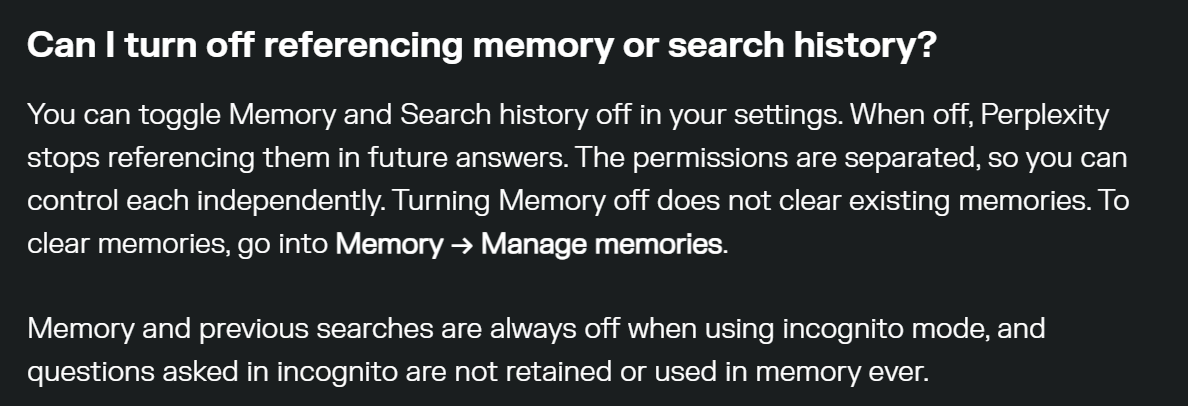
Memory rewrites the question before it is asked. OpenAI's help centre is direct about it: "If memory is enabled, ChatGPT may use relevant saved memories when rewriting a search query", and its own example is a user who has mentioned being vegan and living in San Francisco getting a search for "good vegan restaurants San Francisco" (Searching the web with ChatGPT). All five surfaces have a version of it. Gemini personalises "by referencing your chats in Gemini Apps Activity", Perplexity's memory article says it may draw on stored memories and past searches, and AI Mode's Personal Intelligence "references previous searches and activity saved in your Search Services History". Test inside your logged-in account and you are measuring your account, not what a stranger sees.
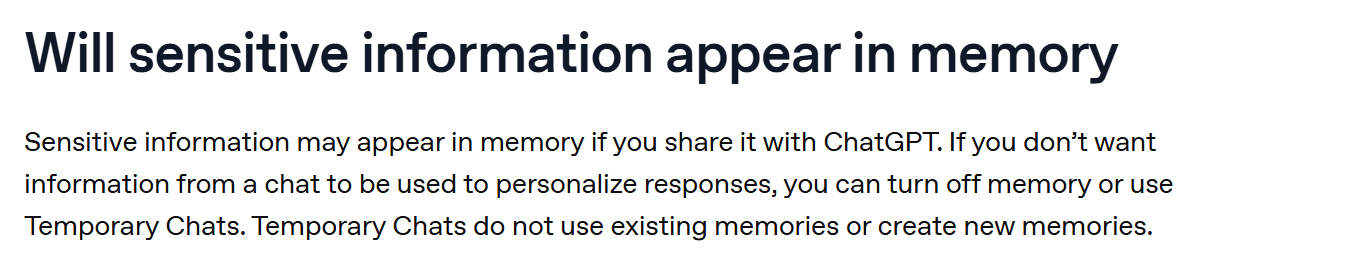
Location decides the shortlist. ChatGPT "may use an approximate location based on your IP address to provide relevant local results", and device location sharing "is optional and off by default". Google is blunter about Gemini: "Location data is always collected if you use Gemini Apps so that they can provide you with a response that is relevant to your query", and by default that means the general area from your IP address or the Home or Work addresses in your Google Account. Google Search estimates it from your device, your saved addresses, your past activity and your IP (manage your location on Google). Run the test on the shop wi-fi and you have measured your own front door, which is the one place your customers are not standing when they ask.
Phrasing is not one thing. Google says AI Mode "uses a 'query fan-out' technique, dividing your question into subtopics and searching for each one simultaneously across multiple data sources", and its advice to searchers on the same page is "Ask multiple versions of your question to get the best answers" (AI Mode in Google Search). When the company running the system tells people one phrasing is not enough, one phrasing is not a measurement either.
The model underneath changes too. A Perplexity Pro subscription "includes all our latest and most powerful AI models", and in AI Mode a signed-in user can pick Pro from the menu and get Gemini 3 Pro instead of the Fast model on the same question. None of this is deterministic. A re-ask can differ, so one miss is not a verdict and one hit is not a rank.
The eight prompts a customer would actually type
Write eight prompts once, then stop changing the sentences. Change the values inside them when a location or a service changes. Never change the shape, or you lose the ability to compare one month to the next. They fall into five kinds of question, and you want all five.
Plain discovery, with no business name in it. This is the one that tells you whether you are a candidate at all.
best {category} in {suburb}
top rated {category} near {landmark}
Constrained discovery, with the detail people care about: opening hours, parking, a health fund, a brand you stock, whether you see children. This tests whether anything on the open web says that about you.
{category} in {suburb} open on a {day}
{category} in {suburb} that {constraint}
Problem first, because customers rarely search the category name. They search the thing that is wrong.
who do I see for {problem you solve} in {suburb}
Named, which is what the assistant says when a friend has mentioned you and someone is checking.
is {your business} any good
what do people say about {your business}
Comparison, the one that decides a booking.
{your business} or {a rival you actually lose to}, for {the job}
These overlap with the shorter ten-minute test in does ChatGPT recommend businesses like yours on purpose. That post asks the question once. This one is built to be run again in October, and again in November, against the same eight sentences.
With more than one location, run the discovery prompts per location rather than once for the brand. A flagship being named tells you nothing about the suburban site, and the suburban site is usually where the gap is.
How to monitor AI search visibility across ChatGPT, Gemini, Perplexity, Copilot and Google AI Mode
Same day each month, fresh chat for every prompt, and the location written into the wording every time even when the assistant already knows where you are: OpenAI's own fix for local results showing the wrong area is to "include your city, neighborhood, or postal code in your question". Set the assistants up first, because each vendor documents a different control.
| Assistant | The documented way to run it clean | How the location gets decided |
|---|---|---|
| ChatGPT | Web search works signed out: "People who are not signed in can also use web search." Signed in, use a Temporary Chat, which OpenAI says "do not use existing memories or create new memories". Memory sits in Settings, under Personalization (Memory FAQ) | Approximate, from your IP address. Device location sharing "is optional and off by default" |
| Gemini | You can use Gemini signed out, and Google says your data is then "not associated with your Google account". Signed in, start a Temporary Chat, and "to stop Gemini from personalizing your experience using info from a past chat, delete that chat" | "Location data is always collected." By default that is the general area from your IP address, or the Home or Work addresses saved in your Google Account |
| Perplexity | Incognito mode. Perplexity's help centre: "Memory and previous searches are always off when using incognito mode, and questions asked in incognito are not retained or used in memory ever." The toggles are in Settings, under Memory | Not documented in Perplexity's help centre. Name the suburb in the prompt |
| Copilot | Open Settings, select Personalization, and move the Saved memories toggle off. Microsoft's line for what you are switching off: Copilot "can offer you tailored experiences by remembering key details and preferences from your conversations" (privacy controls) | Not documented on Microsoft's Copilot privacy pages. Name the suburb in the prompt |
| Google AI Mode | At google.com/ai. Google says that without history and personalised recommendations enabled "you can still access AI Mode but can't pick up where you left off with previous searches" | Google estimates it from your device, your saved home and work addresses, your past activity and your IP address |
Run the prompts this way.
- Open a fresh chat or a new incognito thread for each prompt. No follow-ups in the same thread: the first answer is now context for the second.
- Paste the prompt exactly as written in your list.
- Fill in the seven columns below before you move on. Doing it afterwards from memory defeats the point.
- Open the sources. All five assistants show what they read, and that list is the most useful thing on the screen.
- Do not re-ask a prompt that missed until you like the answer. Log the miss.
The asking is quick. Every answer in my run landed in well under a minute. Writing down what came back takes longer, and it is the part that is worth anything.
The log: seven columns, every month
A spreadsheet, a notes file, anything you will still have in a year. Seven columns, the same ones as the shorter test in the ChatGPT piece so the two are comparable.
| Date | Assistant | Prompt | Named? | Rivals named | Sources cited | Facts correct? |
|---|---|---|---|---|---|---|
| 2026-09-06 | ChatGPT | best physio in {suburb} | yes, third of four | Harbourline Physio, Ridge Sports Clinic | Business Profile, a "best physios in {suburb}" roundup, HealthEngine | phone number wrong |
| 2026-09-06 | Gemini | who do I see for shoulder pain in {suburb} | no | Harbourline Physio, Ridge Sports Clinic, a GP clinic | Google Maps | |
| 2026-09-06 | Perplexity | is Coastline Physio any good | yes | none | the practice website, two directory listings | yes |
Coastline Physio and its two rivals are invented, so nobody reads those rows as a case study. The last column earns its place: OpenAI warns that "search results and citations can be incomplete, outdated, or incorrect", and an assistant reading a stale phone number off a directory is a booking you never hear about.
Three months in, the log answers questions a screenshot never can. Are you named more often than in July, or only on the named prompts where the customer already knew you existed? Is the same rival in every assistant, or only in Gemini? Is the same directory cited in six answers out of eight? That last one is the work list.
How often should you check AI visibility?
Monthly. The tool vendors writing about this recommend daily scans and weekly audits, which makes sense when you are tracking a national brand across hundreds of prompts and can average the noise away. With eight prompts and one business, daily checking measures the noise: my own run threw up five shortlists inside six minutes without a thing changing about the businesses in them. Pick a day, put it in the calendar, and treat a month where you did the run and learned nothing as a good month. The value is in the series.
What to do when the answer does not name you
A miss is a starting point, and the log usually tells you which of three things went wrong.
You were not in the sources. If the same roundup, directory or association page is cited every month and you are not on it, that is a job with a name and a deadline. It is the most common finding and the easiest to fix. In my run, the warmest answer about a named clinic came off an aggregator page the clinic almost certainly never thinks about.
Your profile did not answer the question. The constrained prompts are the diagnostic. If "physio in {suburb} that bulk bills" names three rivals and not you, and you do bulk bill, the problem is that nothing public says so. Finishing your Google Business Profile is the first hour of work, every time.
You had nothing worth reading. Google's local ranking guidance says "more reviews and positive ratings can help your business's local ranking", and its Grounding with Google Maps documentation says a place question is answered "based on Google user reviews and other Maps data". A profile with 30 one-line reviews from 2023 gives an assistant nothing to match against a specific question. Getting more Google reviews steadily, and replying to the ones you get, is the slow half and the half that compounds. Whether reviews move your local ranking is the longer version of that argument.
One thing not to do: filter who you ask. Google's contribution policies stop merchants who "discourage or prohibit negative reviews, or selectively solicit positive reviews from customers", and a screened profile does not describe your business anyway, so it gives an assistant less to work with rather than more. Ask everyone or ask nobody.
None of this buys a mention. OpenAI's own wording is "Placement is not guaranteed", and no vendor publishes a formula. What the work buys is candidacy, and the full list of what a local business can change is the parent piece to this one.
Where AI visibility tools fit
Tools do this at a scale a person cannot. Fifty prompts across twenty locations and five assistants is thousands of runs a month, and it has to be automated or it will not happen. What a tool cannot do is make the system underneath deterministic. It is still sampling, one sample at a time, and any product reporting a stable rank is presenting a sample as a fact. Read whatever you buy for how it describes its own sampling. With one or two locations, the log above is the same measurement done by hand.
Cloutly's AI search visibility asks ChatGPT, Gemini and Perplexity discovery questions such as "best {category} in {locality}" once a month and records whether each location was named and which rivals were named; it does not sample Copilot or Google AI Mode, and its results are a point-in-time sample of a non-deterministic system, one sample each, so a re-ask can differ.
FAQ
Should I test signed in or signed out? Signed out where the assistant allows it, because a signed-in account carries memory and saved locations into the query. OpenAI documents that web search works for people who are not signed in, and Google documents signed-out use of Gemini. Where you must be signed in, use the documented private mode: a Temporary Chat in ChatGPT or Gemini, incognito in Perplexity.
Why did the same prompt give me a different answer an hour later? Because these systems are not deterministic, and because the web underneath them changed. That is the reason for the log, and the reason for monthly rather than daily. If you got two answers, log both.
Is this the same thing as tracking my Google ranking? No. Your local ranking is one input the assistants read, not the output they produce, and an assistant can name a business that is nowhere near the map pack. Track both, separately.